
The Agona Nkwanta township, which is the capital of the Ahanta West Municipal Assembly of the Western Region, continues to face a growing challenge of poor sanitation as residents live increasingly in a town where sewerage is precarious and space for toilets and removal of waste is at a premium.
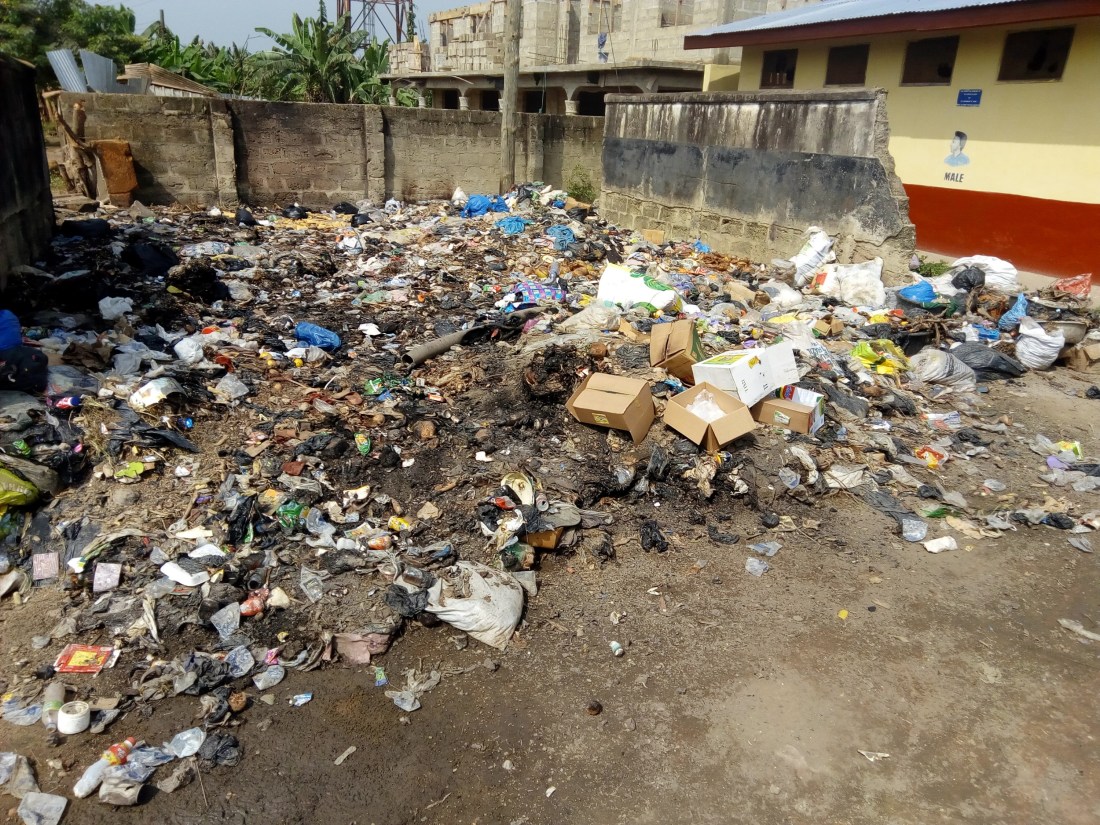
The situation of sanitation generally in Agona Nkwanta is poor as many residential areas are being polluted unceasingly with higher offensive smells from refuse dumps, public toilets and open defecations, especially when it rains.
According to the World Health Organization (WHO), poor sanitation reduces human well-being, social and economic development due to impacts such as anxiety, risk of sexual assault, and lost of educational opportunities.
The international authority on public health links poor sanitation to transmission of diseases such as cholera, diarrhoea, dysentery, hepatitis A, typhoid and polio, and exacerbates stunting, some of which are common in the Municipality.
Chrisdaily focused its sharp lenses on the attitude of residents in terms of dumping of refuse, the states of the various refuse dumps, the actions being taken by the Ahanta West Assembly to curb the increasing sanitation problem in the Municipality and it’s capital, and many more.
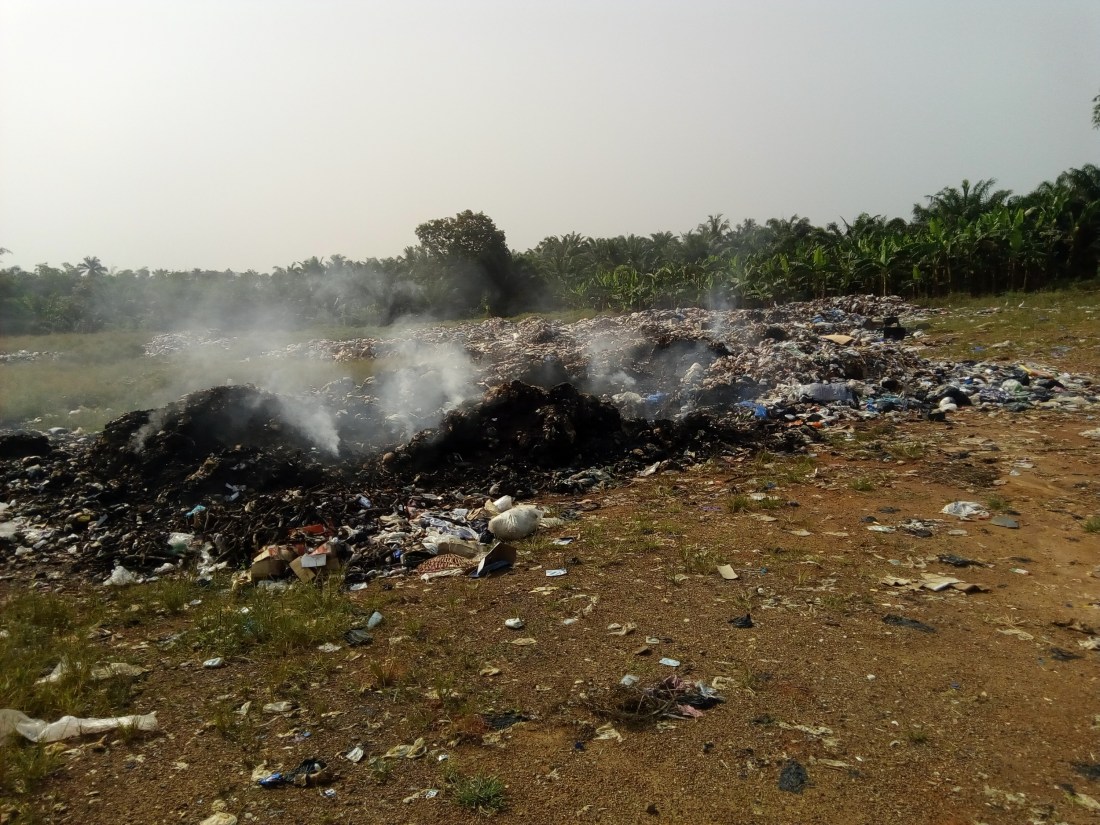
The Assembly has a dump site at Damte, a suburb of Agona Nkwanta where all the wastes generated are dumped. It is worrying to note that the road leading to the site is in a bad state, sometimes preventing the waste collection vehicles from getting access to the site, a development which hugely affects the entire Agona township.
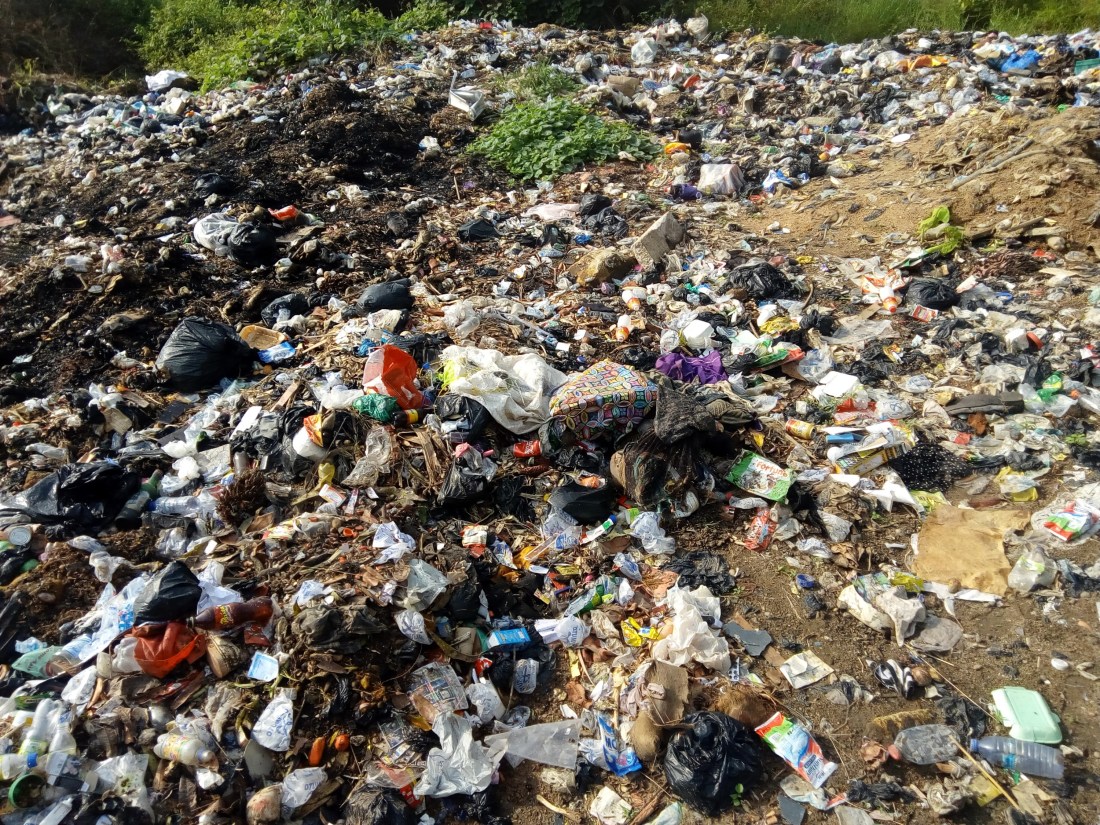
Meanwhile, the Damte community has created a place where they dump refuse, some few meters to the main site. People defecate around the place and also dispose refuse indiscriminately there.
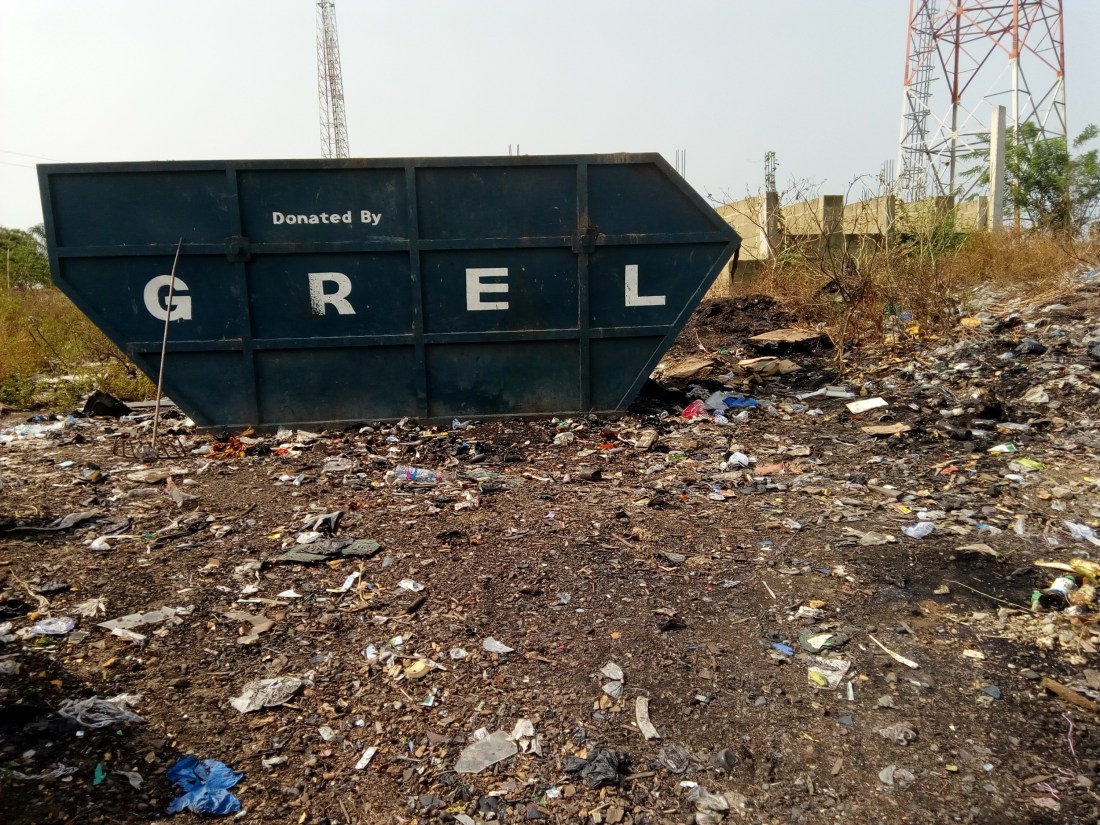
Stiil at Damte, one gets to the Ghana Highways and meets a similar situation. There is a public toilet on the same spot where for some time, there was no container in which residents could dump their garbage. Just recently, the Ghana Rubber Estate Limited (GREL) donated a container to be used for that course.
At Domeabra, the condition is fairly good because much of the wastes have been removed, considering the number of bags, rubbers and sacks of refuse which were so close to the road.
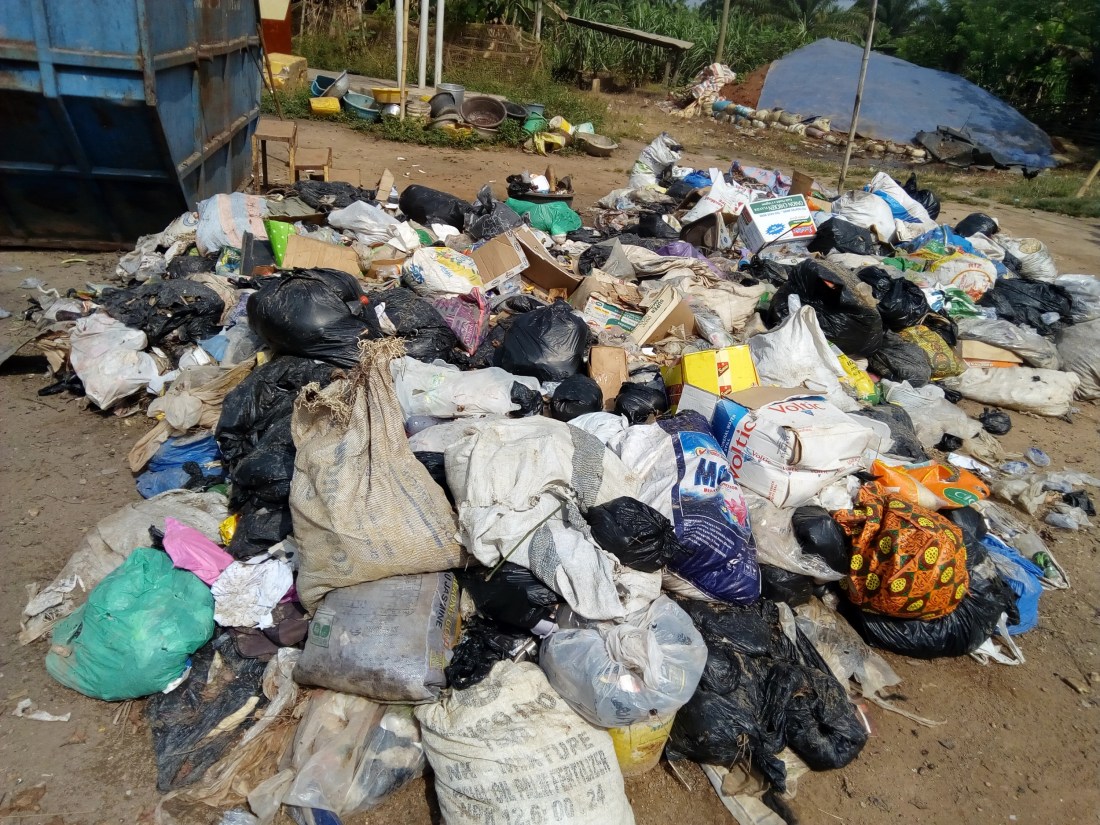
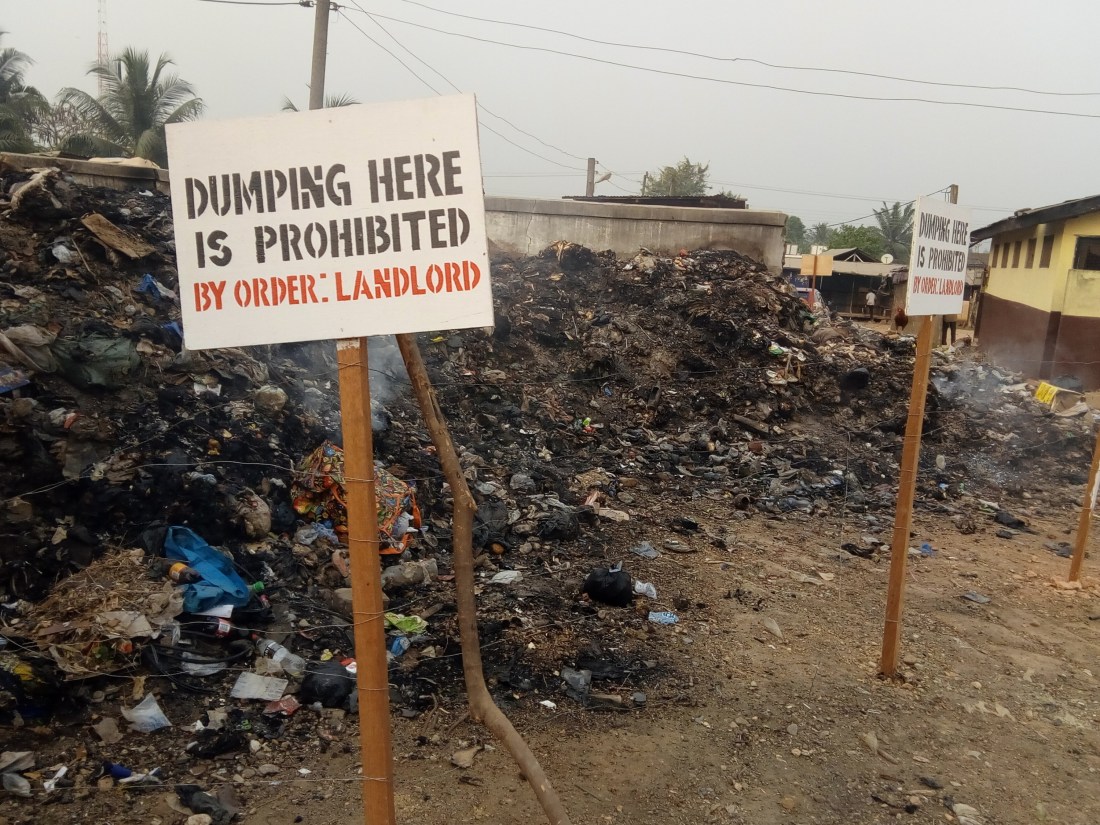
The Agona Nkwanta Cargo Station has a heaped refuse dump which keeps blowing up all the time. Waste generated around the Ahantaman Rural Bank area are dumped at the Cargo Station. Currently, residents around the Bank have been ceased from dumping refuse at the site behind the Bank. This is an order by a supposed landlord which the Assembly is yet to take any action on.
Reports indicate that refuse dumped at the Cargo Station had been removed at least twice in the November-December period last year, yet, the current situation is worse.
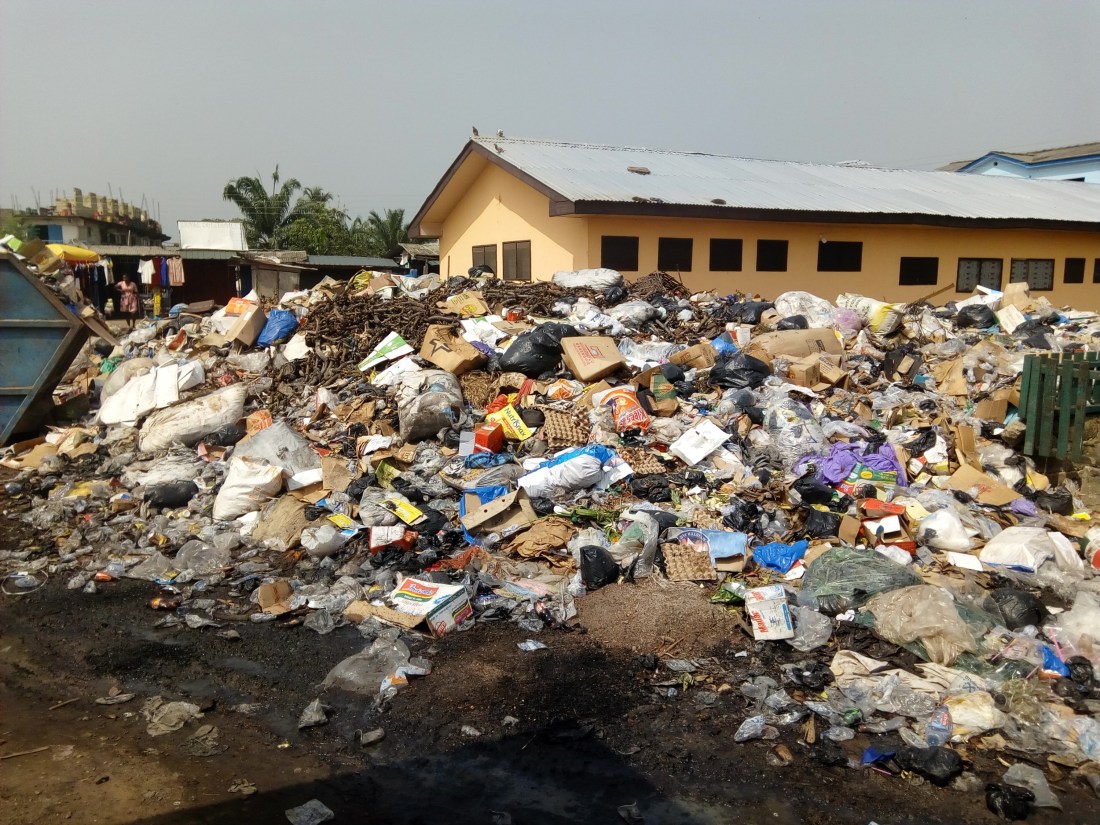
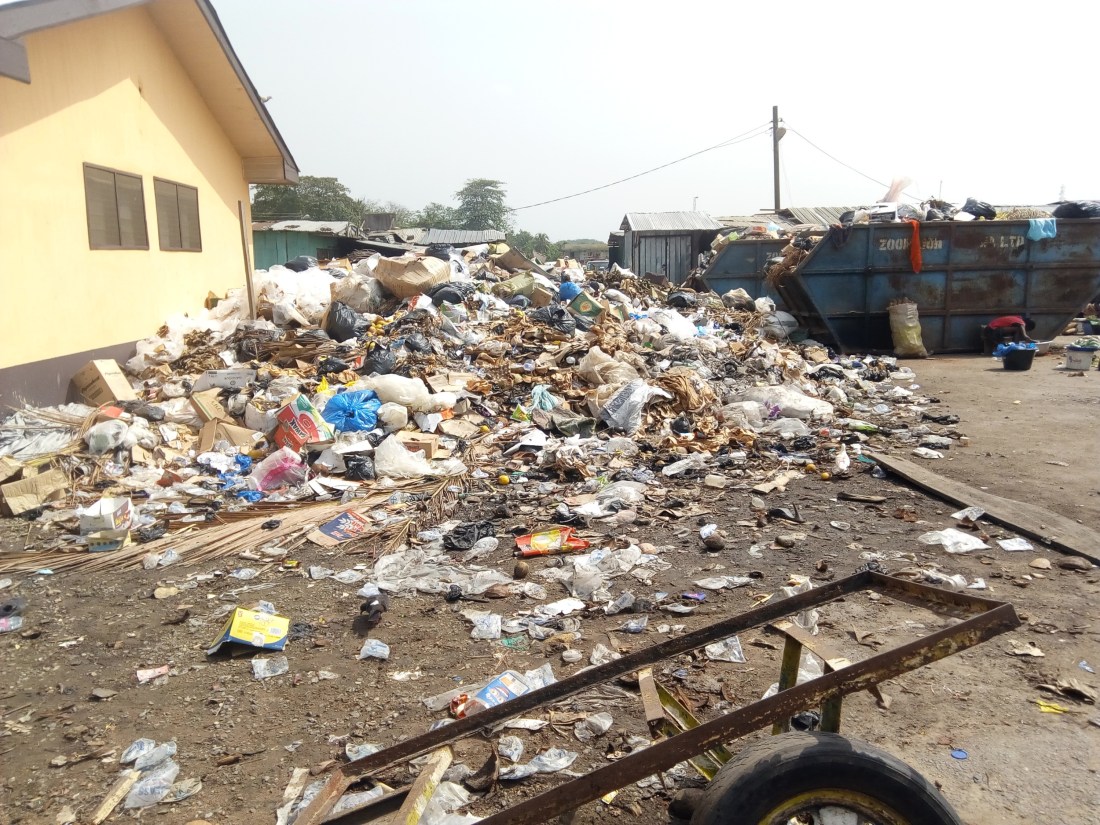
However, the one at Agona-Fie which was very close to the residents has been pushed back considerably, yet, a lot needs to be done looking at how filthy the environment appears to be.
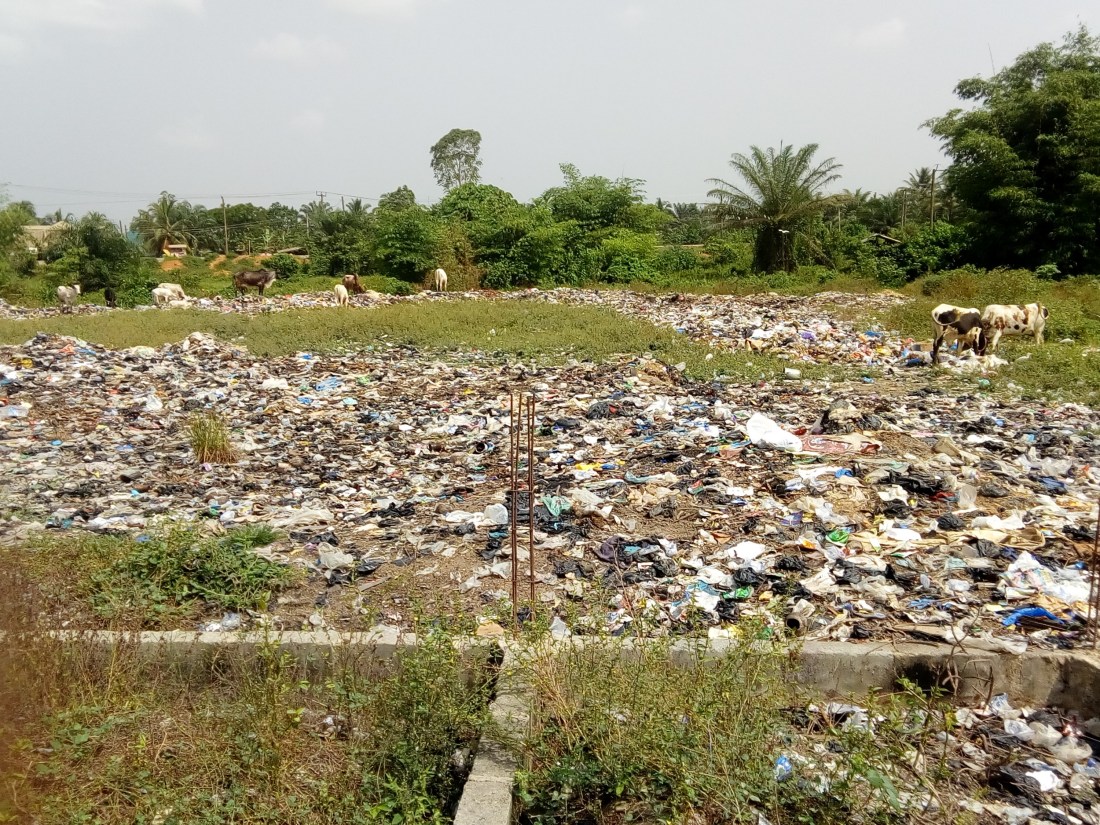
Waste Generation
Statistics from the Sanitation department of the Ahanta West Municipal Assembly made available to Chrisdaily shows that total waste generation in the Municipality is about 53 tons per day while total waste collection in the Municipality is about 17 tons per day representing about 30% – 32%, which means that not even half of waste generated is collected on daily basis from the data above.
Mr Ted Tettey, the Sanitation Officer for the Municipality, tells Christian Yalley that “our disposal facilities are insufficient, not matching the amount of waste generated.”
He says, “the sanitation situation is fairly good,” adding that his outfit is doing its best to tackle sanitation issues. To him, the company in charge of waste collection operates in the entire region so sometimes it becomes difficult to get them on time.
He therefore pleads for a collective effort in keeping the community clean, thereby asking residents to change their attitudes to be able to achieve a better sanitation status.
What are the effects of poor sanitation on residents?
In a series of interviews with residents around the respective dumps, they all complained bitterly about the poor nature of the refuse dumps, attributing it to the attitudes of the residents, others on the Assembly. Many shop owners at Domeabra and the Cargo Station have closed down their shops because the smell from and the direct exposure to the refuse is unbearable for them. This has led to loss of jobs and reduction in productivity.
WHO reveals that inadequate sanitation is estimated to cause 432,000 diarrhoeal deaths annually and is a major factor in several neglected tropical diseases, including intestinal worms, schistosomiasis, and trachoma. It adds that some 827,000 people in low- and middle-income countries die as a result of inadequate water, sanitation and hygiene each year, representing 60% of total diarrhoeal deaths. Poor sanitation is believed to be the main cause in some 432,000 of these deaths.
Sanitation increase with increasing population, hence, the Ahanta West Municipal Assembly should work at achieving better water, sanitation and hygiene conditions for its citizens.
Story by: Christian Yalley|chrisdaily
 chrisdaily